
Seismic Gas Shutoff Valve Installation
Utah Valley sits along the Wasatch Fault. A seismic shutoff valve is one of the few earthquake preparations that is a plumbing decision.
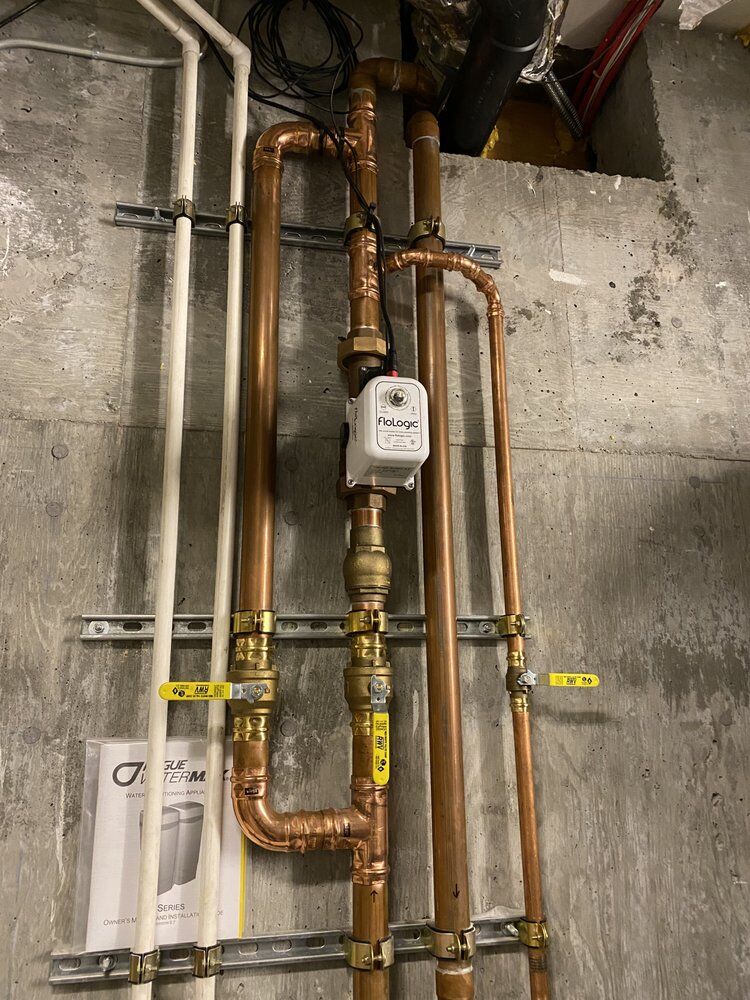
A seismic (or earthquake) gas shutoff valve installs on the gas line and closes automatically when it senses ground motion above a set threshold. The purpose is narrow and worth stating precisely: it reduces the risk of gas continuing to flow into a structure that may have damaged piping after a significant earthquake. Post-earthquake fire is a well-documented secondary hazard, and this device addresses one contributor to it.
Here is what it does not do. It does not detect a gas leak — that is a different device entirely. It does not shut off during a small tremor you barely feel, and it is not supposed to. And once it trips, it stays closed until someone resets it, which typically means no gas for heat, hot water, or cooking until that happens. Some jurisdictions require a utility or qualified person to reset it.
We are not going to tell you every home needs one. What we will do is explain how it works, what it costs, what resetting involves, and let you decide. For a household that has thought about earthquake preparedness at all, it is usually a reasonable and relatively inexpensive item on that list.
When this is likely your problem
What's included — and what isn't
Included in the quote
- Assessment of your gas service, meter location, and pipe size
- Recommendation on valve type and correct placement
- Installation of the valve under permit
- Pressure test of the affected piping after installation
- A walkthrough of what trips it, what resetting involves, and who can reset it
- Marking and demonstration of your manual shutoff location as part of the visit
Quoted separately
- The valve itself
- Permit and inspection fees
- Any structural or seismic retrofitting of the building
- Gas leak detection devices, which are a separate product
- Appliance-level shutoffs and flexible connector upgrades, quoted separately
- Reset service after an event, which may be the utility's role depending on the device
What drives the number
We quote after diagnosis, not before. These are the factors that move the number most on this service:
- PIPE SIZEValve sizing follows your service line, which drives the device cost.
- PLACEMENTMeter location, orientation, and whether it is accessible and protected.
- TYPEExcess-flow versus motion-sensing devices behave differently and cost differently.
- PERMITFiling and inspection where the jurisdiction requires it.
- COMBINEDAdding it during other gas work is meaningfully cheaper than a standalone visit.
Utah Valley note
The Wasatch Fault runs along the eastern edge of Utah Valley, which is why seismic preparedness gets more attention here than in most of the country. Requirements and reset procedures vary by jurisdiction and by utility, so confirm your specific situation with the City of Orem and Dominion Energy rather than relying on a contractor's summary, including ours.
Related services
What the visit involves
Explain it properly first
What it does, what it does not, and what happens after it trips. Before any quote.
Check placement
Orientation matters on motion-sensing valves. Wrong placement means unreliable operation.
Install under permit
Valve fitted, system pressure tested, and inspection attended where required.
Show the household
Where the manual shutoff is, what the device looks like when tripped, and who resets it.
Frequently asked
01Will this valve detect a gas leak?
No, and this is the most common misunderstanding about them. A seismic shutoff valve responds to ground motion, not to gas. Leak detection is a separate device with a separate purpose. If you want both, you need both — and we would rather you knew that before buying than after.
02What happens after an earthquake trips it?
The valve closes and stays closed. That means no gas to your furnace, water heater, range, or fireplace until it is reset. Depending on the device and local rules, resetting may be something a qualified person does or may require the utility. We will tell you which applies to the valve we install, because discovering it afterwards during an emergency is the wrong time.
03Could it shut off for no reason?
Motion-sensing valves are calibrated to trip above a threshold, so ordinary vibration — traffic, a slammed door, construction nearby — should not trip them. Incorrect orientation or placement is the usual cause of nuisance trips, which is why placement is the part of this job that actually requires care.
04Is it required in Orem?
Requirements vary by jurisdiction and can change, and we are not the authority on it. Check with the City of Orem building department. Most Utah Valley homeowners we install these for are doing it voluntarily as part of earthquake preparedness rather than to satisfy a rule.
05Is it worth the money?
That depends on how you weigh a low-probability, high-consequence event. It is a modest cost, particularly if added while other gas work is happening. We are not going to tell you it is essential, and we would be sceptical of anyone who does — but for a household already thinking about earthquake readiness, it is a reasonable item.
Ready to get this looked at?
Call and describe what's happening. You'll get an honest read before anyone drives out.