
Hard Water & Scale Solutions
Utah Valley water is genuinely hard. Whether that is worth spending money on depends entirely on which symptom is bothering you.
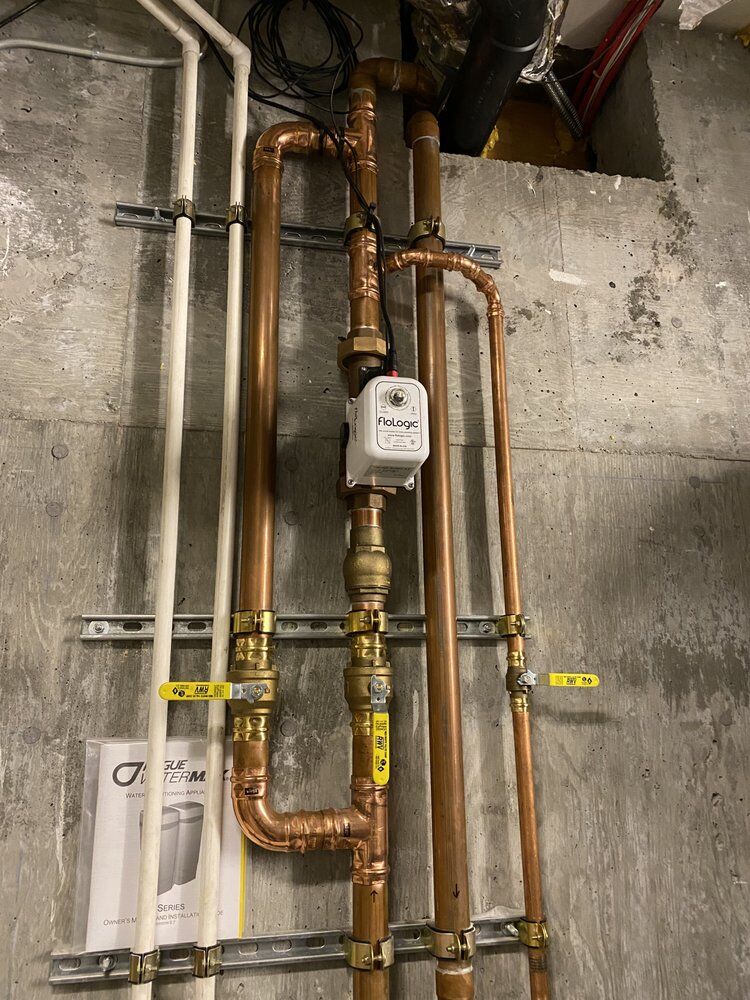
Water here carries a lot of dissolved calcium and magnesium. That is what leaves white crust on fixtures and shower glass, shortens water heater life, makes soap feel like it never rinses away, and leaves dishes spotted straight out of the dishwasher. It is one of the most consistent complaints we hear in this valley and one of the most consistently mis-sold solutions.
The distinction that matters: a softener removes hardness minerals through ion exchange. A filter removes sediment, chlorine taste, and other contaminants. They are different machines solving different problems, and sales conversations blur them constantly. If your complaint is scale and soap, softening addresses it. If your complaint is taste, filtration does, and a softener will not — some people find softened water tastes slightly different in a way they do not prefer.
We will also give you a straight answer about salt-free conditioners. They do not remove hardness minerals; they alter how those minerals crystallise, which can reduce scale deposition without changing the water's hardness. They will not give you the soap-lathering change most people actually want from softening. That is not a reason to dismiss them, but you should know what you are buying.
When this is likely your problem
What's included — and what isn't
Included in the quote
- A conversation about which symptom you are actually trying to solve
- Water hardness testing at the tap
- Assessment of the install location, drain access, power, and existing loop
- Installation of softener or filtration equipment with a bypass valve
- Drain line connection for regeneration discharge
- Startup, programming to your measured hardness, and a maintenance walkthrough
- Service and repair of existing softeners
Quoted separately
- The equipment itself
- Electrical outlet installation where the location lacks one
- Plumbing modifications to create a softener loop where none exists
- Drain line routing beyond a reasonable run to an existing drain
- Ongoing salt supply
- Descaling of existing appliances and fixtures already affected
- Permits where required for the discharge connection
What drives the number
We quote after diagnosis, not before. These are the factors that move the number most on this service:
- PROBLEMScale, taste, or sediment — three different complaints and three different machines.
- LOOPWhether the house was plumbed with a softener loop, which many Utah homes were.
- LOCATIONDrain access, power availability, and space at the intended position.
- HARDNESSYour measured hardness, which sets equipment sizing and regeneration frequency.
- HOUSEHOLDOccupancy and water use, which affect sizing more than square footage does.
Utah Valley note
A lot of Utah Valley homes were built with a softener loop already plumbed in — a pair of capped stubs, usually in the garage or utility room. If yours has one, installation is considerably simpler and cheaper than in a house that does not. Worth checking before you assume this is a big job.
Related services
What the visit involves
Name the actual complaint
Scale, taste, and sediment need different equipment. This question comes before any recommendation.
Test the water
We measure hardness at your tap rather than quoting a regional average.
Check the install position
Loop, drain, power, and space. Many Utah homes are already plumbed for this.
Install, program, explain
Bypass fitted, unit programmed to your measured hardness, and salt maintenance walked through.
Frequently asked
01Will a softener make my water taste better?
Probably not, and this is the most common misunderstanding we encounter. Softening removes hardness minerals, not chlorine, sediment, or taste compounds. Some people find softened water tastes slightly different, occasionally slightly salty, which is not an improvement to everyone. If taste is your complaint, you want filtration, which is separate equipment.
02Is softened water safe to drink?
For most people, yes. Ion exchange adds a small amount of sodium, which is worth mentioning to your doctor if you are on a strictly sodium-restricted diet. Many households install a separate drinking tap or a reverse osmosis unit at the kitchen sink for that reason, which is a reasonable approach.
03Do salt-free conditioners work?
They work differently, and honestly the evidence is mixed. They do not remove hardness minerals; they change how those minerals crystallise, which can reduce scale buildup. What they will not do is change how soap behaves, which is what most people are actually after. We will tell you what each type does rather than presenting one as strictly better.
04How much maintenance does a softener need?
Mainly keeping the brine tank topped up with salt, plus an occasional check that it is regenerating correctly. It is low effort but not zero effort, and a softener that has run out of salt is doing nothing at all while appearing to be installed and working. That is a surprisingly common finding on service calls.
05Will a softener fix the scale already in my water heater?
No. It prevents further accumulation; it does not reverse what has already deposited. On a water heater with significant existing scale, flushing may help, and on a heavily scaled older unit the practical answer is sometimes that the softener protects the next one rather than saving this one. We would rather say that than imply otherwise.
Ready to get this looked at?
Call and describe what's happening. You'll get an honest read before anyone drives out.